


The sound of an engine purring is excitement, freedom, and aspiration. Purchasing a vehicle is one of the most important financial and lifestyle decisions a customer will make. But that experience doesn’t end at the purchase; it extends across a complex ecosystem of manufacturers, suppliers, dealerships, service networks, insurers, and mobility providers.
And this is where things start to fall apart.
A financing query goes unanswered. A service issue lacks clarity. A customer navigating multiple touchpoints is forced to repeat their journey at every step. What should feel seamless instead becomes disjointed and frustrating.
The challenge isn’t just an old support system; it’s misaligned support in an industry that has rapidly evolved. While automotive innovation spans electric vehicles, connected systems, and digital platforms, customer experience still struggles to keep up with this complexity.
Today’s customers expect connected, real-time, and personalized interactions across the entire automotive ecosystem. When that expectation isn’t met, the impact goes beyond experience; it directly affects customer trust, brand loyalty, and revenue across the value chain.
Key Challenges in Automotive Customer Support
- Slow, Inefficient, and Emotionally Disconnected Support
Across the automotive industry, customer interactions often occur during high-stress moments, vehicle breakdowns, accidents, service issues, or warranty concerns. Delays, long wait times, or multiple transfers don’t just create friction; they increase anxiety and erode trust.
According to research, 77% of customers expect immediate interaction when they contact a company, while 88% say the experience is as important as the product itself (Salesforce).
In automotive, a simple issue isn’t just a ticket, it’s a delayed purchase decision, a missed service appointment, uncertainty around financing, or time lost navigating ownership. Customers expect fast, knowledgeable, and empathetic support, yet too often they encounter transactional, script-driven interactions that fail to meet the moment.
- Fragmented Ecosystem and Broken Customer Journeys
The automotive industry operates across a highly fragmented ecosystem including original equipment manufacturers (OEMs), dealerships, service centers, insurers, and logistics providers all manage different parts of the customer journey. No single entity owns the end-to-end experience.
As customers move between digital platforms and physical touchpoints, data and context are lost, forcing them to repeat information and navigate inconsistent service levels. This structural fragmentation makes it difficult to deliver seamless, omnichannel experiences.
According to a study, nearly 90% of customers report dissatisfaction due to inconsistent experiences across channels, highlighting the impact of disconnected journeys (Capgemini).
- Lack of Unified Data and Increasing Product Complexity
Modern vehicles are no longer purely mechanical; they are connected, software-driven ecosystems involving electric vehicle (EV) systems, advanced driver assistance systems (ADAS), subscriptions, and digital services. At the same time, customer interactions require context across service history, warranties, financing, and usage patterns.
Without a unified customer view, agents are forced to manually gather information, slow down resolution, and increase the risk of errors. This gap becomes even more critical as product complexity continues to grow.
According to a study, 74% of service agents lack access to complete customer information, limiting their ability to deliver fast and accurate support (Salesforce).
- Lack of Transparency Across the Lifecycle
Transparency remains a persistent challenge across the automotive journey, from pricing and financing to servicing and warranty coverage. Customers often struggle to get clear, consistent answers, leading to confusion, hesitation, and reduced confidence in the brand.
This issue extends beyond dealerships into the broader ecosystem, where inconsistent communication across partners further complicates the experience.
31% of automotive customers report low trust in dealership transparency, making trust a key differentiator in purchase and retention decisions (Group Caliber).
- Inconsistent After-Sales Experience
The ownership phase is where long-term loyalty is built but also where many automotive brands fall short. Customers interact with multiple service providers, parts suppliers, and partners, each delivering varying levels of service quality and communication.
This inconsistency creates a fragmented ownership experience, especially during maintenance and repairs, moments that are critical for trust and retention.
According to a survey, 57% of customers dissatisfied with post-purchase services consider switching brands within 6 to 18 months, highlighting the direct impact of after-sales CX on retention (Capgemini).
- Reactive Support in a Proactive, Connected World
With the rise of connected and software-defined vehicles, customer expectations have shifted toward proactive and predictive support. Customers expect brands to anticipate issues, provide timely alerts, and offer solutions before problems escalate.
However, most support models remain reactive, addressing issues only after customers reach out. This gap limits the ability to deliver seamless, forward-looking experiences.
According to a survey, 47% of customers are likely to switch brands if companies fail to deliver proactive engagement, emphasizing the need for predictive, insight-driven CX (Embitel).
What Automotive Leaders Are Doing Differently
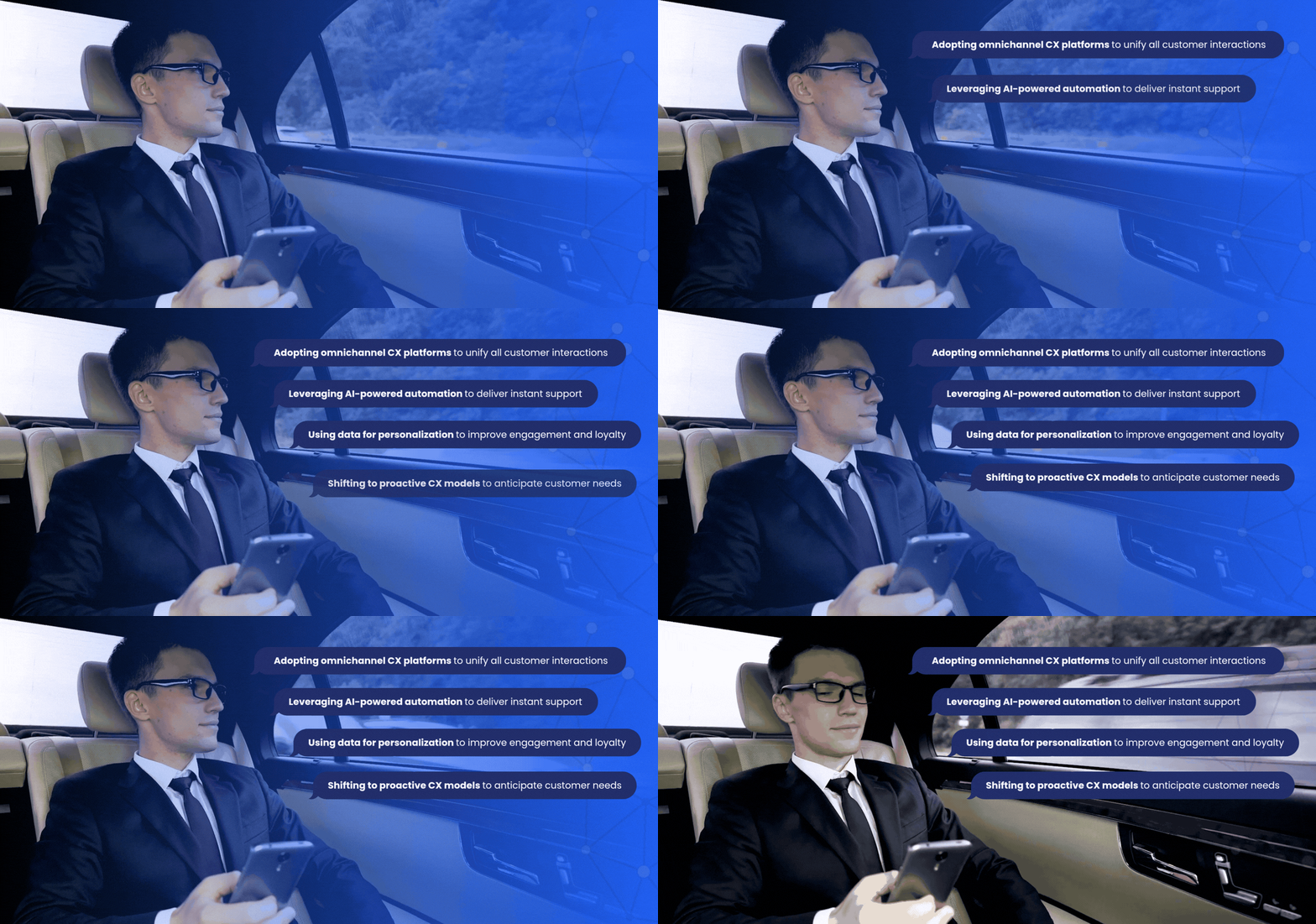
Forward-thinking automotive brands are reimagining customer support as a growth driver, not a cost center. They are:
The UnifyCX Solution: Revving Up Your Customer Support
Automotive customer experience isn’t broken because of one issue; it’s the result of disconnected systems, delayed responses, and fragmented ownership across the ecosystem. Fixing it requires more than adding AI or scaling agents. It requires orchestrating both intelligently.
UnifyCX brings together AI-powered automation and human expertise into a single CX ecosystem, built to handle the complexity of automotive journeys, from purchase to ownership and beyond.
 The automotive industry is at a turning point. The brilliance of modern vehicles must be matched by the intelligence of customer experience. Moving beyond the call center era isn’t about adding more channels; it’s about building a connected, AI-driven ecosystem that anticipates customer needs, delivers seamless journeys, and creates lasting relationships.
With UnifyCX, automotive brands can bridge the gap between digital and physical experiences, ensuring every interaction from a test drive booking to a service request, is smooth, fast, and personalized.