

Most utility leaders don’t realize it, but billing is not just a back-office function anymore. It’s your highest-volume customer touchpoint, your biggest driver of complaints, and one of the fastest ways to lose trust.
Every unclear charge, every unexpected spike, every delayed response adds friction to an experience that customers expect to be seamless. And when that friction repeats month after month, it compounds into something far more damaging: customer dissatisfaction at scale.
What makes this worse? The majority of these billing queries should never reach your support team in the first place. They are predictable. They are repetitive. And with the right approach, they are completely avoidable.
Yet most utility providers are still stuck managing the symptoms of rising ticket volumes instead of fixing the root cause.

Why Is Utility Customer Support Still Outdated?
Utility support remains stuck in a reactive cycle due to fragmented legacy CRMs, a lack of real-time data integration, and minimal use of conversational AI. Customers expect to understand why their bill changed the moment they open it, but traditional models only tell them what they owe, forcing them to call in for basic explanations.
AI-powered, omnichannel platforms are closing this gap by enabling instant usage transparency, automated payment plans, and proactive alerts, transforming the billing experience from a cost center into a strategic advantage.
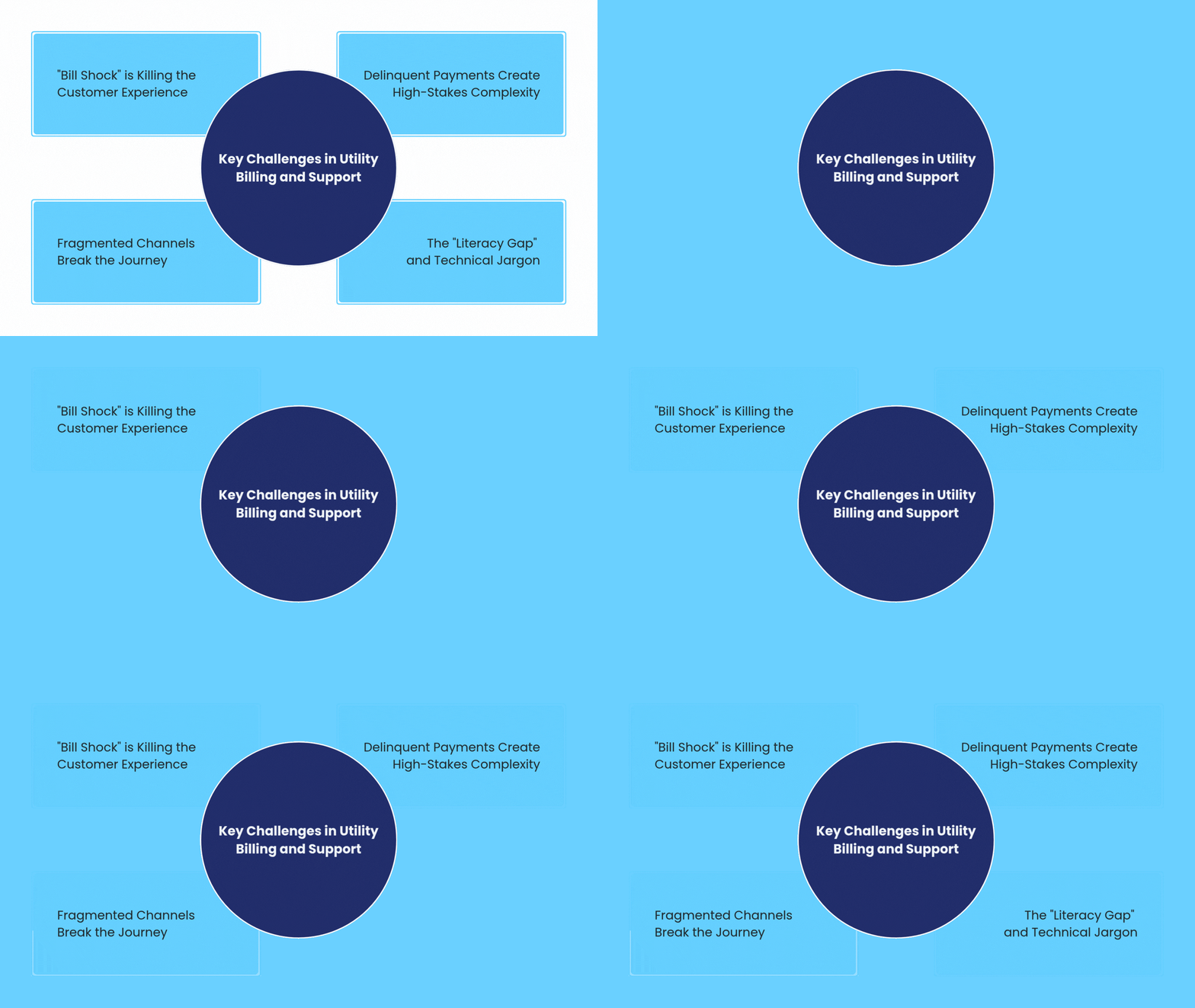
1. “Bill Shock” is Killing the Customer Experience
Utility affordability has become a global crisis. In the U.S. alone, residential electricity prices rose 7% in 2025, far outpacing inflation (PowerLines 2026). When a customer is met with an unexplained high bill and a long wait for support, the brand’s perception is damaged before the first word is even spoken.
2. Delinquent Payments Create High-Stakes ComplexityOutstanding payments across the Energy and Utilities industry have hit a staggering $23 billion (Experian 2026). Support teams are no longer just answering questions; they are negotiating complex debt management. Traditional CRMs lack the empathetic, AI-driven workflows needed to handle these sensitive conversations at scale, leading to higher default rates.
3. Fragmented Channels Break the JourneyCustomers expect to move from a “high usage” alert on their mobile app to a WhatsApp chat and then to a phone call without repeating their story. However, 90% of customers report dissatisfaction due to inconsistent experiences across these channels (Capita 2025).
4. The “Literacy Gap” and Technical JargonResearch shows that 59% of consumers feel their utility bills are written in “another language” (SECC). Without AI to translate “Transmission Adjustment Riders” into plain English, customers have no choice but to flood your support lines for clarification.

What Utility Leaders Are Doing Differently
Forward-thinking energy providers are reimagining billing as a retention engine, not an administrative burden. They are:
- Eliminating 40–60% of billing-related contacts through AI-driven self-service
- Using real-time usage intelligence to prevent bill shock before it happens
- Embedding AI into billing journeys to explain charges instantly
- Shifting from cost-per-contact to cost-per-resolution models
The UnifyCX Solution: Powering Up Your Customer Support
AI-Powered Speed and Billing Transparency
Empowered Agents, Empathetic Solutions
Proactive Anomaly Detection
Data-Driven Quality and Compliance
The Shift Ahead: From Billing Support to Billing Intelligence
Billing is no longer just a transactional function; it’s becoming a strategic intelligence layer for customer experience.
For years, utilities have treated billing as something to manage: generate the bill, handle queries, and resolve disputes. But that model is fundamentally reactive, and it’s no longer sustainable in a world where customers expect instant clarity and zero effort.
The next phase of transformation is about moving beyond support and into intelligence.
This means using AI and data not just to respond to billing questions, but to predict, explain, and prevent them altogether. It’s about turning every bill into a real-time, personalized communication that answers questions before they’re asked.
Drive the Future of Utility CX
In the Energy and Utilities sector, customer experience is no longer a back-office support function, it is your most powerful retention and revenue engine. When billing is transparent and support is proactive, trust becomes your strongest currency.
UnifyCX helps utility brands move beyond the “reactive surge.” We help transform customer support into a proactive, AI-driven growth center, one that slashes operational costs, supports household affordability, and maximizes customer lifetime value.
If billing queries are driving an increase in support costs and customer dissatisfaction, it’s time to fix the root cause and not just manage the volume.
Book your CX strategy consultation today and see how UnifyCX can defuse the billing surge and power your utility’s digital transformation.
Drive the Future of Utility CX
What are the biggest challenges in utility billing support?
Why do billing queries dominate utility contact centers?
Billing queries are repetitive and often triggered by unclear charges, sudden usage spikes, or lack of real-time explanations. Since most systems don’t provide proactive insights, customers are forced to contact support for clarification.
How does AI reduce billing-related support tickets?
AI automates routine queries, provides instant bill explanations, enables proactive alerts for usage anomalies, and powers self-service channels thus reducing the need for customers to contact support.
Why is self-service critical in utility customer experience?
Self-service allows customers to instantly access bill details, usage insights, and payment options without waiting for an agent. This reduces contact center load while improving speed, convenience, and customer satisfaction.
How does omnichannel CX improve utility billing support?
Omnichannel CX ensures customers can move seamlessly across channels: app, chat, voice, or WhatsApp, without repeating information, leading to faster resolutions and a more consistent experience.